
Fed Challenge
The College Fed Challenge is a competition run by the Federal Reserve each fall. Teams of undergraduates give a fifteen-minute briefing on the state of the economy, make a monetary policy recommendation, and then defend it under questioning from Federal Reserve economists.
I have seen the competition from four sides: as a competitor, as a judge, as an assistant coach, and as an instructor of the course that feeds the team.
My history with the competition
- Competitor. I first competed in the high school competition in 2012, and then at Rutgers from 2013 to 2016, where I was co-captain. We placed second in the New York District in 2014. In 2016 we won the New York District and then the national competition.
- Judge. I judged the high school and college competitions at the Federal Reserve Bank of Chicago in 2018 and 2019.
- Assistant coach. I have been the assistant coach of UCLA’s team since 2022, working with Chris Surro.
- Instructor. From 2023 to 2025 I assisted in Econ 162, the course that prepares students for the competition, where I critiqued each briefing and questioned students the way the judges do. I pushed them to think beyond the models from their introductory and intermediate courses. In Spring 2026 I also delivered its lectures.
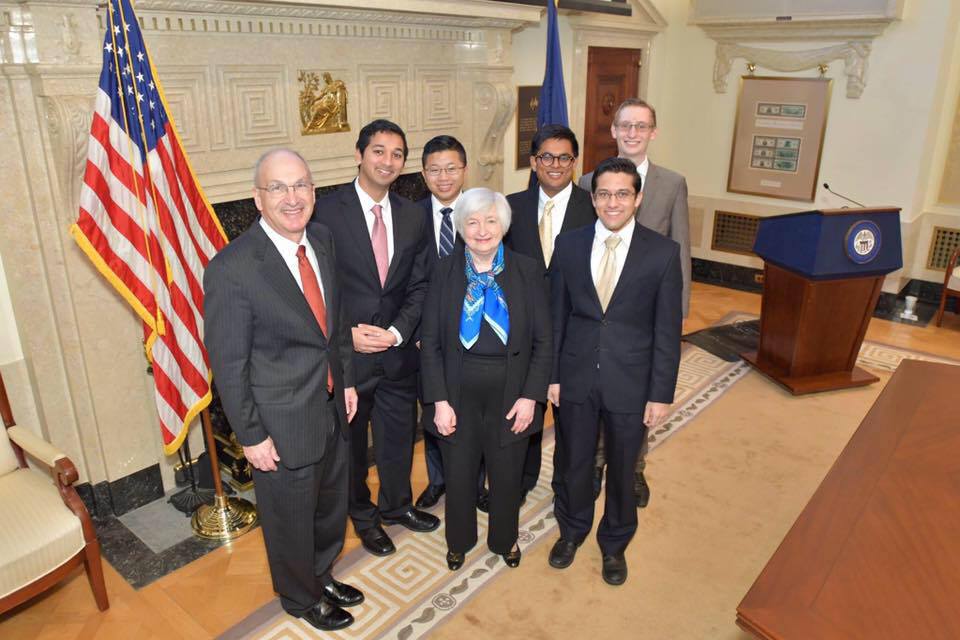
UCLA’s team
UCLA could not enter before 2021, because the competition did not cover the San Francisco district. An at-large district opened that fall.
| Year | Result |
|---|---|
| 2021 | Honorable Mention (top six nationally) |
| 2022 | Honorable Mention (top six nationally) |
| 2023 | Third place |
| 2024 | — |
| 2025 | Third place |
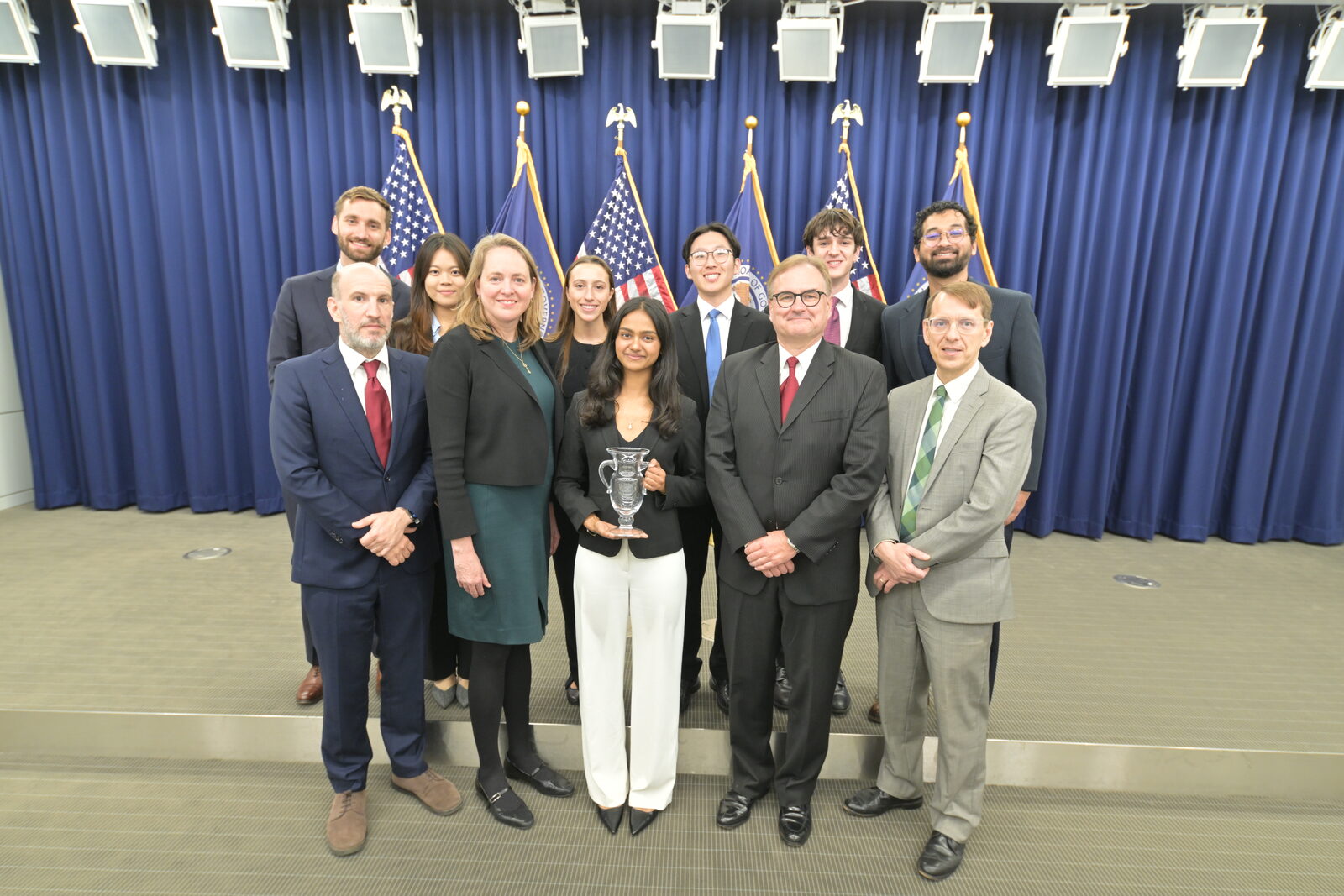
Many schools keep a team of about seven students and retain them year after year. We do it differently. About thirty students take the course each spring, from sophomores to seniors, and a new team is chosen from them every year. Most years the students choose the team by their own vote, and Chris and I only break ties. Students who are not selected often keep helping the team through the fall. We prioritize student growth and access, and we still want strong showings at the competition.
The course: Econ 162, Monetary Policy
The first four weeks are lectures on monetary policy theory and on the history of the Federal Reserve from the nineteenth century to the present, built around Ben Bernanke’s 21st Century Monetary Policy. Each week students turn part of the reading into a question a judge might ask, and answer it in 100 to 150 words. In the second half they do the same with a current news article. They also submit one video response in each section of the course, which builds public speaking alongside the ability to answer questions.
The rest of the quarter is presentations.
- Specialist teams. Students first work in groups of five, each with a specialty: news, data, the Fed, research, and international.
- Briefing teams. The class is then regrouped so that every new team has one specialist from each area. Each team gives a fifteen-minute briefing to Fed Challenge rules: current conditions, a forecast, the risks, and a policy recommendation.
- Revision. Each briefing is presented, critiqued, revised, and given again. There are two rounds of live questions, with feedback in between.
- Final paper. Each student writes up the same four parts alone, and may disagree with their team’s recommendation.
There is no exam. Students are evaluated on their presentations, their speaking, their answers to questions, and the paper. These are closer to the skills they will need after college.
Coaching the team
Preparation runs from August to the competition in the fall. The students present, and the coaches work with them on the slides and the delivery. We never write the script. The analysis, the forecast and the recommendation are the students’ own, and our job is to sharpen the argument.
The questioning is where most of the work goes. We run fifteen to thirty minutes of questions every week, sometimes twice a week, with new questions each time, written to match what Federal Reserve economists ask. Feedback is given to each student on their own strengths and weaknesses, and to the team on how it works together.
UCLA’s team in the press
- UCLA Social Sciences: UCLA earns third place in National College Fed Challenge (2025)
- UCLA Economics: UCLA takes Third Place in the Fed Challenge (2025)
- Federal Reserve Board: Federal Reserve announces College Fed Challenge winners (2025)
- Daily Bruin: UCLA students to present monetary policy recommendations in national competition (2023)
The 2016 Rutgers team in the press
- Bloomberg News: Why College Students Are Role-Playing as Central Bankers
- Bloomberg TV: Rutgers Takes 13th Annual College Fed Challenge
- Federal Reserve Board: Federal Reserve announces College Fed Challenge winners
- Rutgers Today: Rutgers Students Win College Fed Challenge
- My Central Jersey: Rutgers University students win National College Fed Challenge
What students say
“TA Ali deserves special recognition as well. His technical expertise in macroeconomics is immediately evident, but what distinguishes him as an instructor is his ability to communicate complex ideas in an accessible and highly structured manner. … Ali played an instrumental role in developing students’ analytical and communication skills through questioning. His questions throughout the quarter regularly forced students to think beyond prepared remarks, defend assumptions, identify weaknesses in arguments, and improve their ability to respond under uncertainty. Looking back, many of the strongest moments during the final presentations and Q&A sessions can be traced back to habits that were developed through his questioning earlier in the quarter.”
— Econ 162, Spring 2026
“Professor Surro and Ali do a fantastic job in trying to prepare each student in terms of the material and grow their intuition. Live Q&A’s really help you learn on how to answer on your feet.”
— Econ 162, Spring 2026